Keeping an eye on a place · 5 min read
One plan for the whole family — including Mum and Dad’s place
Caring rarely stops at one address. If you’re the sort of person who keeps half an eye on things, you probably worry about more than just your own home — there’s your parents’ place, maybe a sibling who lives alone, maybe an adult kid who’s just moved out. The trouble is that most tools are built around a single account and a single home, so covering everyone means a patchwork of separate apps and separate bills. That friction is often what stops people setting anything up at all, even when the worry is real.
It doesn’t have to be that complicated. The cleaner model is one plan that stretches to cover the people and places you care about, without multiplying either your logins or your costs.
Why the “one home, one account” model breaks down
Single-account tools quietly assume the person paying is the only one who cares and the home they live in is the only one that matters. Real families don’t work that way. Care is usually shared — you and a sibling both worry about the same parent — and it usually spans several homes. Force that into a one-account mould and you get duplication: two of you paying for overlapping tools, nobody sure who’s watching what, and gaps where a place everyone assumed was covered actually isn’t.
The result is either overspending or under-covering, and often a bit of both. What families actually need is a way to pool their attention: shared awareness of shared concerns, under one roof.
What a household plan covers
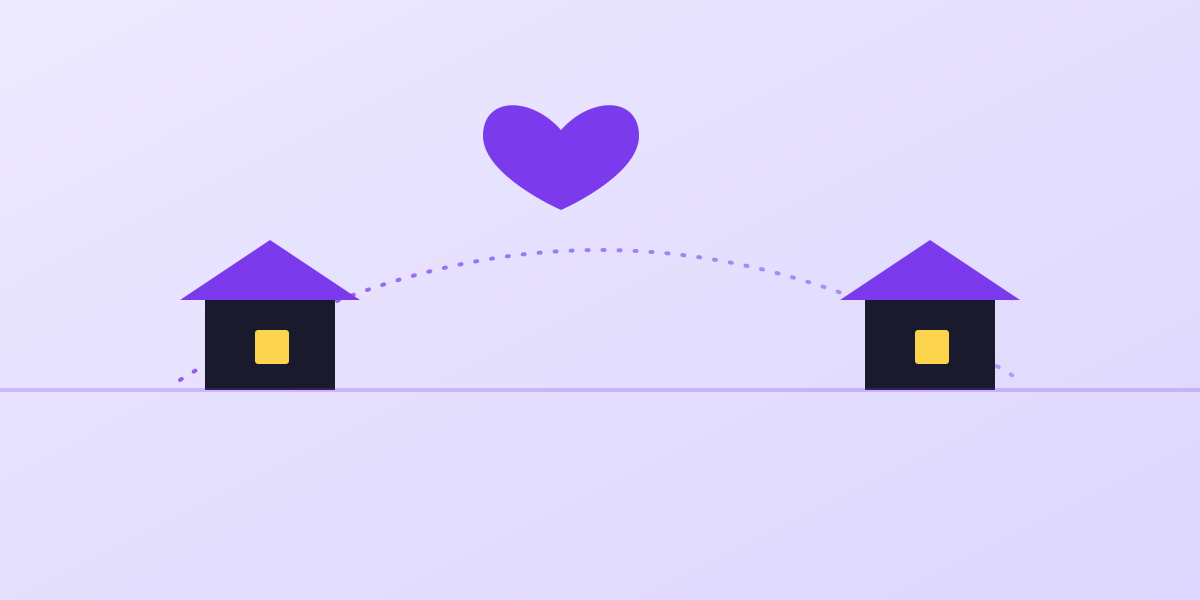
A household plan flips the model. Instead of one account tied to one home, it’s one plan that covers several people and several places at once. That maps onto how care really flows — a few family members, a few homes, one shared source of calm.
- Up to five people on a single payment — you, a partner, siblings, or an adult child, each with their own private access.
- Several watched places, not just one — your home, your parents’ place, and another home that matters to the family.
- One bill instead of a scattering of separate subscriptions no one can quite keep track of.
- Shared awareness, so the load of “keeping an eye out” doesn’t rest entirely on whoever happens to worry the most.
A worked example
Take a fairly ordinary family. You and your brother both worry about your parents, who live in the family home an hour from each of you. You also have your own house, and your brother has his. Under the old model, you might each end up with a separate app watching your own place, your parents watching nothing, and everyone vaguely hoping someone else has the parents’ street covered. Under one household plan, the picture is simple: you set up the plan, add both your parents’ home and your own as watched places, and bring your brother onto the same plan so he shares the view. One payment covers the lot. If something is reported near your parents’ street, you both hear about it. Nobody’s doubling up, nobody’s paying twice, and the place that mattered most to both of you is the one that’s actually covered.
Sharing the worry lightens it
There’s a quieter benefit to putting the family on one plan: it stops any single person carrying the whole weight of vigilance. When care rests on one over-worrier, it wears them down and often breeds resentment. When it’s genuinely shared — everyone seeing the same calm view of the places that matter — the worry gets distributed and, oddly, gets smaller. Knowing your brother is also across your parents’ street means you don’t have to hold it all yourself.
That’s the real value of “one plan for the whole family”: not just tidier billing, but a shared, calm awareness that no one person is stuck shouldering alone. If you’re actively juggling several addresses, watching more than one home goes deeper on keeping them all straight, and sharing peace of mind across the family covers bringing everyone onto the same plan without five separate subscriptions.
The essentials stay free
It’s worth being clear about what you do and don’t need to pay for, because the household plan is an extension, not a toll gate. The protective core — alerts near your own home, the map, reporting an incident, asking your street for footage — is free for everyone, always. Nobody should ever have to pay to protect their own home or to ask neighbours for help in a bad moment.
What the household plan adds is reach: covering more people and more places than your own single home. So the decision isn’t “pay or go without protection” — it’s “do I want to extend that same calm awareness to my parents’ place and share it with my family, on one plan?” For a lot of families, watching a parent’s home is exactly the moment that extra reach earns its keep, and pricing it as one household payment rather than per-person is meant to make covering the people you love the easy choice rather than the expensive one. Presented annually, it works out to a couple of months free versus paying month to month.
Keeping it calm across every address
One last thing worth saying: covering more places should not mean more noise. A good household plan keeps every watched home calm — timely awareness when there’s genuinely something to know, quiet the rest of the time — so adding your parents’ place to your own doesn’t double your alerts or your anxiety. The point of covering the whole family is more peace of mind, not more to keep up with.
How Pryer helps you keep a calm eye out
A Pryer household plan covers up to five people on one payment, each with their own private access, and lets you watch several places at once — your home, your parents’ place, and another home the family cares about. It matches how care actually flows: a few people, a few homes, one shared source of calm, one bill instead of a tangle of separate subscriptions.
Because Pryer watches places, not people, and never sells location data, covering more homes never means monitoring anyone — it means shared, honest awareness of the places you love. One plan, everyone included, the worry spread rather than shouldered alone.
Cover every home you care about on one plan →