Keeping an eye on a place · 5 min read
Worried about a parent living alone? Watch their street, not them
If a parent lives on their own, you probably carry a low, steady hum of worry — not panic, just a background awareness that you can’t be there and can’t quite see how things are. It tends to surface at odd moments: a storm rolls through their suburb, you hear something happened a few streets from them, or you simply haven’t spoken in a couple of days. The instinct is to want more visibility. The question is how to get it without turning your parent’s life into something you monitor.
There’s a calmer answer than most people reach for first, and it starts by being precise about what you’re actually worried about.
Name the worry honestly
When you sit with it, the worry usually isn’t “where is my parent right now.” You know roughly where they are — at home, at the shops, at a friend’s. What you can’t see is the context around them: whether their street is quiet or unsettled, whether something happened nearby that they might not think to mention, whether the place they live is as safe as it was when you last visited.
That distinction matters, because it points to two very different tools. One watches the person. The other watches the place. Only one of them respects the fact that your parent is a capable adult who has been running their own life for decades.
Why tracking the person backfires
Location tracking feels reassuring in the app store and lands very differently at the dinner table. For an independent parent, being followed on a map reads as a statement: we don’t trust you to manage on your own. It can quietly shift the relationship from two adults who care about each other to a carer and a charge — which is often exactly the dynamic your parent is working hardest to avoid.
It also rarely delivers the calm you were after. A dot on a map tells you where someone is, not whether they’re okay, and it invites a habit of checking that feeds the anxiety instead of settling it. You end up more attentive to the app and no more reassured about the thing that actually worried you.
Watch the street instead
Watching the neighbourhood around your parent’s home gives you the context you were missing without ever pointing anything at them. You hear about incidents reported near their address the same way you’d hear about your own street — quietly, factually, when there’s genuinely something to know. The rest of the time you hear nothing, and that silence is the reassurance: their place is okay.
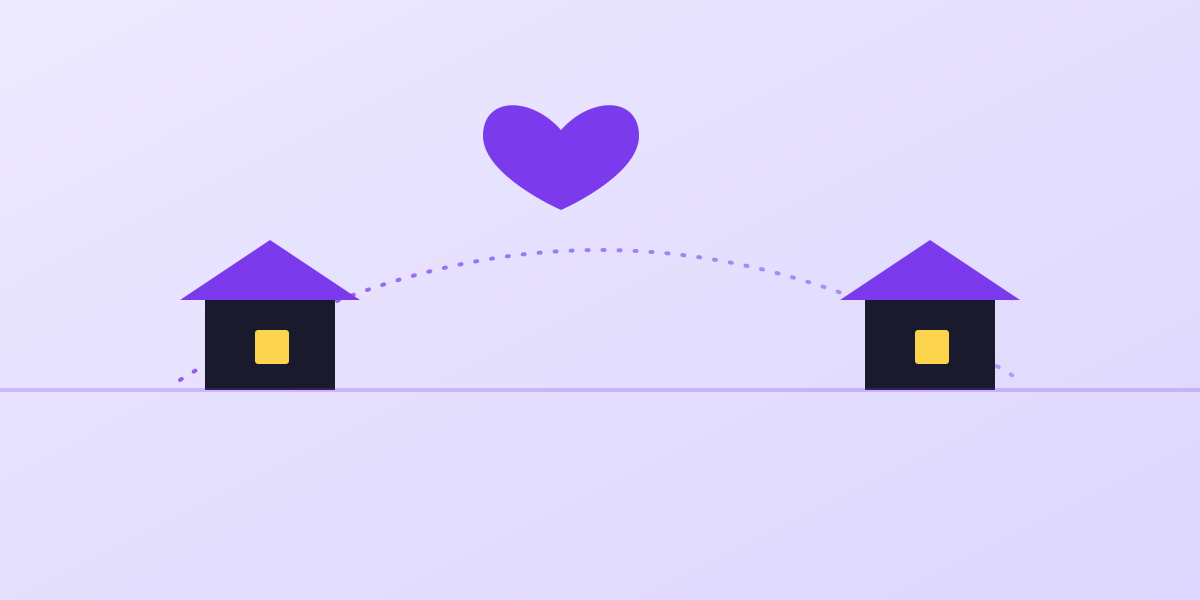
It’s a small but important reframe. You’re not keeping tabs on a person; you’re keeping half an eye on a place you care about, the way a good neighbour would if you lived next door. Your parent keeps every bit of their independence, and you lose the blind spot.
A worked example
Say your mother lives alone in the same house she raised you in, twenty minutes across town. You visit most Sundays, and in between you basically hope for the best. You add her home as a watched place. For weeks, nothing — which is the point. Then one week you get a calm heads-up that there have been a couple of break-in reports on the next street over. Nothing has happened to her. But now, instead of finding out by accident months later, you can casually mention it on Sunday: “Hey, I heard there were a couple of break-ins near you — is your side gate still latching properly?” It’s a normal conversation between two adults, prompted by something you knew and she might not have. That’s the whole benefit: not surveillance, just being slightly less in the dark.
How to start, respectfully
- Add your parent’s home as a watched place, so you hear about incidents reported near their address — not just your own.
- Keep alerts calm and timely rather than a constant feed. You want awareness, not a reason to check your phone every hour.
- Tell your parent what you’ve done and why. “I get a heads-up if something happens on your street” is honest, and it’s a very different sentence from “I can see where you are.”
- Let them opt in to the conversation. Framed as looking out for the place, most parents find it thoughtful rather than intrusive.
If the conversation feels delicate, it’s worth reading how to talk to your parent about safety without taking over — the framing does most of the work. And if you’re weighing up watching a place versus tracking a person more broadly, care without surveillance walks through why the distinction matters so much for the relationship.
What to do when you do hear something
A common worry before setting this up is: what am I supposed to do if I actually get an alert? The honest answer is usually “not much, and calmly.” Most reports near a home don’t call for action — they call for a little awareness. A cluster of mail thefts might prompt you to ask whether the letterbox locks. A break-in a few streets over might be worth a gentle mention about the side gate or the back door. The value is almost never in a dramatic response; it’s in the small, timely, practical nudge you can offer because you knew, and in the fact that your parent hears about their own neighbourhood from you rather than from a frightening rumour.
It also helps to resist the urge to over-interpret a single report. One incident is not a trend, and a quiet street with one report is still a quiet street. Knowing the ordinary baseline for their area keeps any single alert in proportion, which is why it’s worth taking a moment upfront to understand what’s normal for their suburb before you react to anything specific.
The goal here isn’t to eliminate every risk in your parent’s life — that was never possible, and chasing it just makes everyone tense. It’s to close the specific gap that keeps you up: not knowing. Watch the street, not the person, and the worry gets smaller because the blind spot does.
How Pryer helps you keep a calm eye out
Pryer lets you add your parent’s home as a watched place and get calm, timely alerts about what’s actually reported nearby — without a tracker, and without touching their independence. You watch the street; they keep their privacy and their dignity. Most weeks you’ll hear nothing, and that quiet is exactly the reassurance you were looking for.
It works because it targets the real wound — not knowing — instead of the imagined one. And because a Pryer household plan covers up to five people on one payment, keeping an eye on Mum or Dad’s place sits naturally alongside your own home. Peace of mind, not paranoia.
Watch the street around their home →